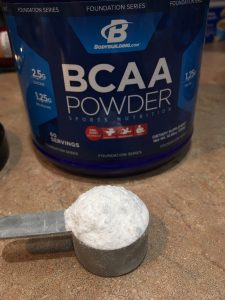
Branched Chain Amino Acids (BCAA) benefits
BCAAs provide bodybuilding benefits such as:
- Energy production.
- Fat Burning
- Muscle Growth
- Muscle Recovery
BCAA powder is among the top 3 supplements amateur and professional strength and bodybuilding athletes take regularly.
Read about Branched-Chain Amino Acids at Wikipedia.
BCAA Bodybuilding Dosage*
- BCAA bodybuilding dosage is 3-6 g per day taken in powder or capsule form.
- Take BCAA supplements before and after workouts for best results.
I take about 3 grams Branched Chain Amino Acid powder before AND after every workout to be sure my muscles have the necessary building blocks to recover and get BIGGER!
What do BCAAs do?
- BCAAs, such as leucine, isoleucine, and valine, are some of the highest-rated bodybuilding supplements.
- These three essential amino acids (supplied by diet) are crucial for anti-catabolic and anabolic effects.
- Leucine actually “switches on” protein synthesis, starting the muscle growth.
- Minimize muscle tissue breakdown during exercise.
- It keeps muscles in an anabolic state, which is necessary for growth.
BCAAs, combined with Glutamine, increase testosterone by lowering cortisol levels.

Recent research on the Essential Branched Chain Amino Acids has shown them to be one of the crucial keys to adding muscle mass, close behind protein and creatine!
Leucine supplements are also available since leucine is the most essential amino acid for muscle growth.
Studies have shown that those who supplement with BCAAs may notice increased body fat loss and maintenance of lean muscle mass. Bodybuilders typically take BCAAs in capsule form, although many of the better-quality protein supplements contain large quantities.
BCAA supplements are relatively inexpensive so you do not want to skimp on these! I currently take 3 grams in powder form, before and after each workout. I consider this an extremely critical supplement if you want maximum muscle growth!
BCAA Bodybuilding Rating:****
BCAAs are highly rated for bodybuilding because they are essential amino acids your body needs to build muscle. Providing your muscles with ample amino acids, especially BCAAs, will help you get the most from your weightlifting and/or bodybuilding program.
What are Branched Chain Amino Acids?
Branched-chain amino acids (BCAAs) consist of three essential amino acids: leucine, isoleucine, and valine. These BCAAs are not made in the body (therefore are considered essential to the diet). BCAAs are found in many animal and plant foods and are popular dietary supplements, especially for bodybuilders and strength training athletes.
BCAA Health Benefits
BCAAs are used as a fuel source for muscle tissue during stress or trauma. A bodybuilding workout is a time of stress when BCAAs are very important. BCAAs also effectively prevent catabolism (muscle breakdown for energy) while encouraging protein synthesis. Due to these attributes, BCAAs are given to victims of severe burns or serious trauma.
Your body needs amino acids to build proteins for many vital functions. Out of around 80 amino acids in nature, the human body requires 20 for good health and proper body function. There are essential amino acids (which the body cannot manufacture and must get through food), and non-essential amino acids (which the body can produce if the diet provides insufficient amounts).
List of Essential and non-essential amino acids:
Here are the 9 essential amino acids:
- Histidine
- Isoleucine
- Leucine
- Lysine
- Methionine
- Phenylalanine
- Threonine
- Tryptophan
- Valine
Here are the 11 non-essential amino acids:
- Alanine
- Arginine
- Asparagine
- Asperatic acid
- Cysteine
- Glutamic acid
- Glutamine
- Glysine
- Proline
- Serine
- Tyrosine
Amino acids are a basic need for the health and proper function of the human body. They produce muscle tissue, neurotransmitters, hormones, and other fluids. Amino acids are also essential for the proper growth, maintenance, and function of organs, glands, muscles, skin, hair, and even nails.

Proteins found in animal foods such as meat, fish, poultry, and dairy products are considered “complete” proteins simply because they contain all 9 essential amino acids. Protein from plant sources is considered incomplete, meaning that one or more essential amino acids are missing. Soybeans are the only exception.
If the body does not have essential amino acids available from the diet when they are needed, it will break down muscle tissue for energy. Bodybuilders and athletes looking to build muscle and strength must consume complete proteins with every meal, preferably 4 to 6 meals daily, to support increased muscle production.
Branched Chain Amino Acids Dosage for the General Public (non-bodybuilders or athletes):
Recommendations on protein consumption vary based on individual differences and goals. A general recommendation for regular individuals is to consume 0.4 grams of protein per pound of body weight. In comparison, athletes and bodybuilders may need up to 1.0 – 1.5 grams of protein per pound of body weight.
Get plenty of BCAA, leucine, isoleucine, and valine in your daily diet for maximum bodybuilding results.
*Dosages are only general recommendations. Always check with your Physician and product label before taking any supplement or medication.