Beginning a Bodybuilding Program
The best muscle building program for a beginner should consist of basic compound exercises that build a strong foundation and strengthen the entire body.
Beginning a bodybuilding program is an exciting undertaking! You will reap many benefits from working hard and building a strong, muscular body that women admire and men respect. Beginners typically build muscle mass fast as the body is not accustomed to the new stress, and it works hard to adapt. If you take it seriously and stick with the program for a few weeks, your friends and family will start to notice the new, strong and muscular you!
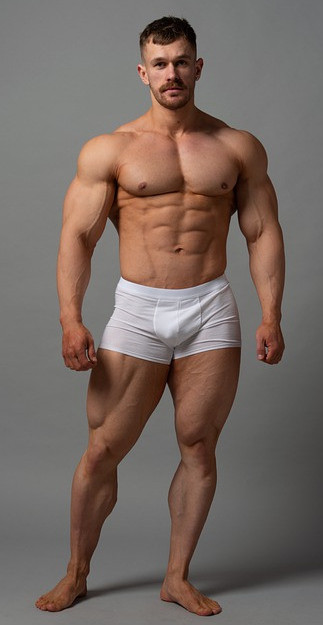
First, a brief introduction on how to build muscle mass quickly. Bodybuilding is simply the process of increasing the muscle mass of the body and decreasing the amount of fatty tissue in the body. This is accomplished through the use of Progressive Resistance Training. Progressive resistance means increasing resistance (weight) over time in a particular movement (exercise). Increasing resistance is possible due to the body’s ability to adapt to stress by becoming stronger in response to the stimulus of exercise.
Simply put, when push a muscle to work hard specifically, harder than the workload to which it is accustomed), the fibers are actually damaged or broken down and the body responds by repairing the muscle and making it slightly bigger and stronger to prepare for the work to be repeated. If the work (exercise) is repeated frequently (with enough rest in between for the repair process to take place) with increased resistance each time, the muscle will get progressively larger and stronger.
Now you know the secret of how to build muscle quickly! That is the basis of bodybuilding weight training. It is a simple process, but there are many, many variables can affect how
fast and how much the muscle will grow. These factors include, but are not limited to, the following:
- Nutrition
- Rest
- Intensity of workouts
- Frequency of workouts
Nutrition

Nutrition is a huge part of successful bodybuilding. I would highly recommend reading everything you can get your hands on dealing with bodybuilding nutrition and supplementation. One way to keep informed in this area is to subscribe to a good Bodybuilding magazine such as Flex or Muscle & Fitness. Both of these fine bodybuilding magazines have many great articles each month dealing with diet, nutrition and supplements.
Rest
Rest is another important area to consider. In this day and age, it is not unusual to get less than 6 hours of sleep a night for a lot of people. I recommend trying to get at least 8 hours if at all possible, even if you need to take a nap! Your body does most of it’s growing as you sleep, so get all you can!
Workout intensity
Workout intensity is something that entire books have been written on. I recommend reading up on this topic as well. Flex and Muscle & Fitness deal with this topic in depth as well. Basically you need to find the right amount of intensity to trigger muscle growth. When a bodybuilder is just starting out, it does not take much to trigger new muscle growth. However, the body can quickly adapt to repeated stress and this can cause muscle growth to slow or stop all together. When this occurs, bodybuilders refer to it as a “plateau”. This is when changes to workout intensity must occur. The muscle must be subjected to a new kind of stress that it is not used to in order to stimulate new growth. Fortunately, there are many methods of changing the workout intensity, but that is beyond the scope of this article.

Frequency of workouts
Frequency of workouts is something that will vary from bodybuilder to bodybuilder. Some bodybuilders workout every day and some only 3 days per week. You will have to experiment with this to determine what works best for you. You must give your muscles enough of a break between workouts to repair themselves, but you don’t want to wait too long between workouts or you will not get maximum results.
Beginner Level
First and foremost, check with your physician to make sure you are in good physical condition to start a weight lifting or bodybuilding program!
I recommend that beginners to bodybuilding start with a simple workout plan. This plan should consist of one exercise per bodypart, working the entire body 3 times per week. Bodyparts are divided as follows:
Bodyparts
- Chest (pecs)
- Back (lats)
- Shoulders (delts)
- Triceps (back of upper arm)
- Biceps (front of upper arm)
- Forearms
- Abdominals (abs)
- Quadriceps (front of thigh)
- Hamstrings (back of thigh)
- Calves (back of lower leg)
Example Workout
Here is an example of a workout:
- Bench press
- Lat pulldowns
- Military Press
- Tricep pushdowns
- Barbell curls
- Crunches
- Leg extensions
- Leg curls
- Standing Calf raises
How to Perform the Workouts
You can start out each exercise with a warm up set. For this set, choose a weight that will allow you to do 25 reps without killing yourself. This will get your muscles ready for heavier weights.
Then do 3 sets of each exercise of 8-10 repetitions. For your first set, choose a weight that will allow you to 10 reps without struggling too much. Rest for 30-60 seconds, then increase the weight for your second set that makes 10 reps considerably harder. For your third set, choose a weight that is heavy enough that you cannot do any more than 8-10 reps no matter how hard you try.
This is called muscular failure. You must take your muscles to the point of failure or they will not grow. The last few reps of the last set are the ones that will trigger your body to respond by making the muscle bigger and stronger. Write the weights down for each exercise so you know where you are for the next workout
It will take a bit of trial and error until you find the correct weight in each exercise. Be sure to take care when you first start out not to load the bar up with some ridiculous weight that may cause injury to your muscles, tendons, or your foot when you drop it!
When to Increase Workout Intensity
As time goes on and you are diligently following your training program, you will notice that when you get to rep number 10 on your last set, you feel like you can do one or two more. This is good! Go ahead and do one or two more for a total of 11 or 12. When you are able to do this for 2 or 3 workouts in a row, it is time to increase the weight in that particular exercise. If you are training a relatively large muscle group, such as chest or quads, you may try increasing the weight by 10 or 15 pounds. If you are doing biceps or delts, then maybe increase only 5 pounds or even 2.5 pounds. The new weight should limit you to 7 or 8 reps on the last set. Soon you will be back up to 12 with the new weight, and then you will bump the weight up even more.
These increases are what you are working so hard for. Increased weight means increased strength, which means increased muscle mass!
Training Logs
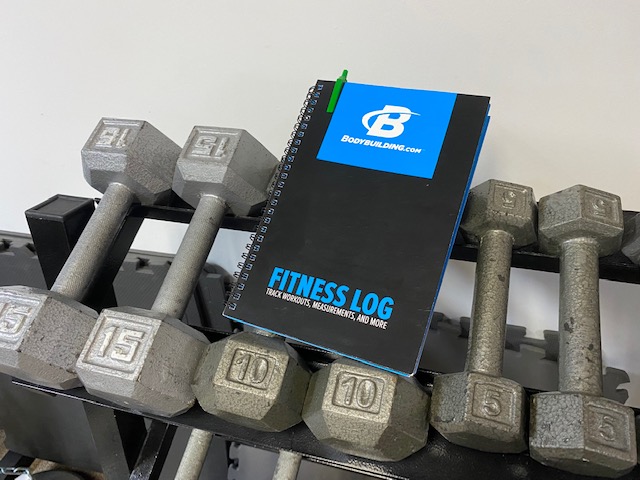
Be sure to write everything down as you train. This is very important for several reasons. First, you may not remember what weight you used in a particular exercise the next time you workout, and you will waste time and effort having to figure it out again! Second, you need be able to gauge your progress as time goes on.
When you see that you are using 10 or 15 more pounds than you did a month ago, you know your strength is increasing and this is great feedback! I recommend getting a good training journal, but you can use any pad of paper. Create a space for the following data for each workout:
Date
Muscle Group worked
Exercise name
Number of sets
Number of reps in each set
Weight used each set
Personal Notes
It might look something like this:
Mon. 4/16/2012 5:30PM
Muscle Group
Exercise
Sets
Reps
Weight
Chest
Bench Press
3 sets
10 reps
100 lbs
9 reps
135 lbs
8 reps
185 lbs
Dips
3 sets
10 reps
bodyweight
9 reps
bodyweight
7 reps
bodyweight
Notes: great workout! felt focused and strong today.
Write things down that may have a positive or negative affect on your workout, such as energy level, whether you were tired or still sore from your last workout, or maybe your left shoulder has been bothering you, etc. If you are detailed here, you may be able to learn some important clues as to what makes you have a good workout verses an “ok” workout.
Maybe you’ll find that when you workout right after work you have more energy than when you wait until 8 o’clock. Or maybe certain foods you eat before a workout help you with your energy and focus. Write down if you have a cold, or if you are recovering from an injury, or if any particular exercise hurts you when you do it. These notes will come in handy sooner or later in the course of your bodybuilding program.
Conclusion
Use this program for 6-8 months and you should see some real progress. At that time, you may want to start to include some advanced techniques to increase your workout intensity in order to continue making good gains. See the article on advanced workouts