Creatine Monohydrate Dosage & Benefits for Bodybuilding
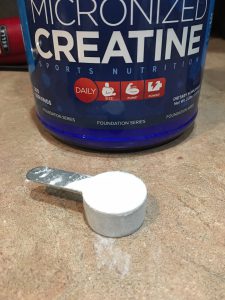
The bodybuilding benefits of creatine (monohydrate, micronized, ethyl ester or other creatine supplements) are well documented. When using the proper Creatine monohydrate dosage as part of a nutrition plan, Creatine can allow many bodybuilders to benefit by adding 5 to 10 pounds of lean muscle mass in a matter of weeks! See also Creatine Ethyl Ester.

Creatine Monohydrate Powder Bodybuilding Dosage*
- The recommended Creatine Monohydrate Dosage for bodybuilding is 3-5g Creatine Monohydrate per day.
- Take every day to keep muscular creatine levels up.
- “Loading” can be done when first using (with dosage of 15-25 g per day for 4-5 days) but not necessary.
- Studies show that creatine works well with Beta-Alanine and HMB.
- Improves strength and endurance.
- Provides energy for muscle contractions.
- Improves performance in bodybuilding, Crossfit, powerlifting and endurance sports.
- Creates environment in muscle cells for enhanced growth-Improves muscle recovery.
- The most heavily researched sports supplement in history.
- No negative side effects have been linked to creatine usage when following label dosing guidelines.
Micronized Creatine Monohydrate supplement
Micronized monohydrate is simply creatine that has been broken down at a molecular level, making a finer powder with much more surface area. This creates a better absorbing formula and may reduce bloating in some people.
- Same effects as monohydrate.
- Creatine Monohydrate dosage in micronized form is 3-5 grams per day.
- May reduce bloating and/or stomach discomfort.
- Slightly more effective than monohydrate.
- Broken down during manufacturing, making it more “pure”.
Creatine Loading Phase
Creatine loading refers to taking a large dose for a period of time when first using creatine, typically 5-7 days in order to saturate the muscles more quickly. After the creatine loading phase, you would continue with a much smaller maintenance dose. Refer to the particular product directions for exact dosage for loading and maintenance phases.
Creatine Monohydrate Information
Creatine “mono” was the first type of creatine available and is still the least expensive form, as well as the most popular and effective bodybuilding supplement overall.
Most people respond well to the recommended creatine monohydrate dosage in powder or capsule form. However, some people may experience bloating, diarrhea and cramps. This can occur if the creatine powder is not ground up into small enough particles. Most of the monohydrate available today has been micronized, which means it is ground up into an extremely fine powder, which mixes much more easily with water.
If you decide to stick with creatine monohydrate, be sure that it is the micronized version. This is the type that I use and it works great for me, and it is cheap, which makes it the top bodybuilding supplement used by bodybuilders and strength athletes everywhere.
All About Creatine

Creatine is the highest rated and reviewed Bodybuilding Supplement of all Time
Creatine monohydrate is the top and best rated workout supplement among strength athletes and bodybuilders, second only to protein. Creatine (monohydrate) and protein are best supplements for muscle growth. The highest rated Creatine formulas will give you results to include increased muscle mass and strength for bodybuilding, baseball, football and other sports.
Creatine has two important effects that make it the top bodybuilding supplement. First, it increases the size, or volume of muscle cells, which is the amount of water each cell can hold. This slight expansion of each cell causes the entire muscle to expand which triggers even further muscle growth.
The second important effect of the proper creatine monohydrate dosage is that it provides muscle cells with immediate energy in the form of ATP (Adenosine triphosphate), which is absolutely essential to perform bodybuilding exercises. Having extra ATP within the muscle cells will allow you to perform more repetitions than you normally could, which translates into greater muscle growth.
Together, you can see why creatine is the top bodybuilding supplement. Unfortunately, creatine effects only work for about 70% of athletes and bodybuilders. Those who do not respond may already produce enough creatine phosphate in their muscles that supplementing does not make much difference.
Let’s get this out of the way first. As with ANY supplement, get your physician’s advice before you begin using it!
My personal use of Creatine as a bodybuilding supplement
I have been taking a daily Creatine Monohydrate dosage for over 15 years. I have never had any kind of negative side effect except some stomach discomfort when I first started taking it. Some side effects are stomach/intestinal discomfort, bloating, dizziness, and dehydration (always drink lots of water when taking this supplement). Begin with a small dose and gradually increase it to the manufacturer’s recommended dose.
I have taken creatine monohydrate in powder form by itself as well as mixed with other bodybuilding ingredients (such as best rated creatine pre-workout formula, BSN N.O. Xplode). I have also taken Kre-alkalyn capsules with no negative side effects. I just have to say, that I would not waste my time in the gym without taking this supplement first! It helps me get a better pump and more forceful muscle contractions. so if you ask me, “Is creatine bad for you?” I would say “no”!
Creatine monohydrate dosage: Is creatine good for you?
Well, keep reading and you may agree with me that if you are looking to build muscle mass quickly or increase your strength, then YES, creatine is good for you!
What exactly is Creatine?
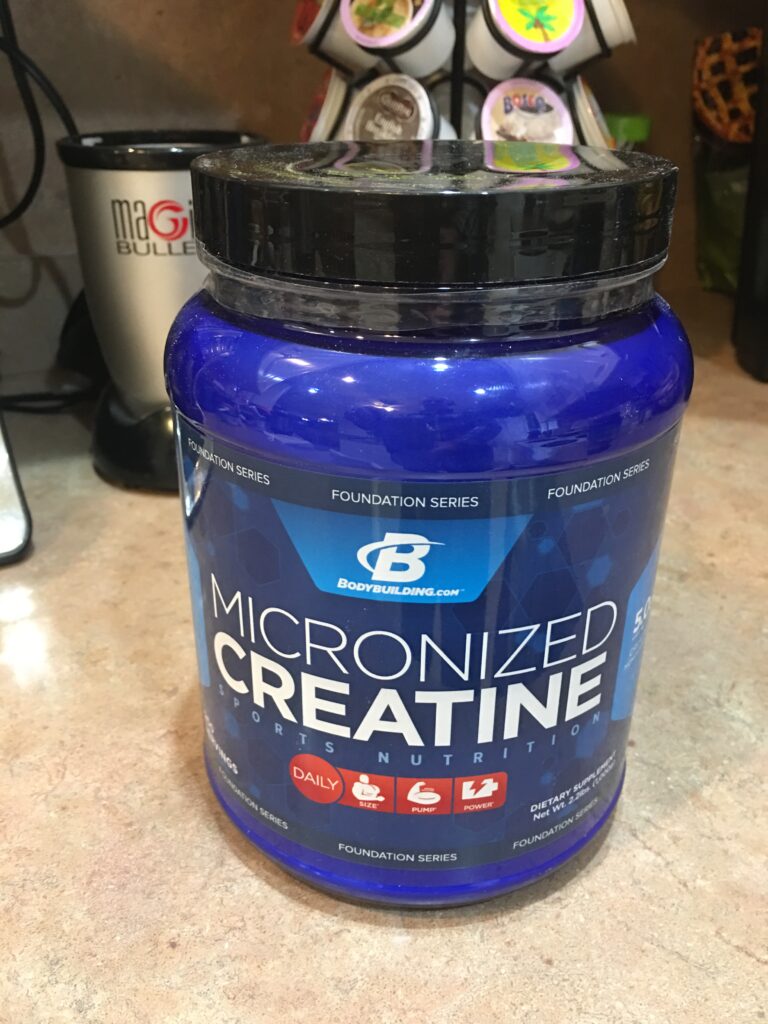
Next to protein, creatine is the most effective natural bodybuilding supplement available today. Creatine is an amino acid derivative that helps boost muscle and strengths gains. Proven safe and effective, it is no wonder that creatine has become one of the most popular supplements for bodybuilders and strength athletes.
See Creatine article at Wikipedia.
Ever since bodybuilders found that taking Creatine Monohydrate results in marked muscular gains, it became popular in the 90s as a hardcore bodybuilding supplement. Scientists have been continually trying to make it even better. We have seen all sorts of formulations such as Kre-Alkalyn, creatine citrate, phosphate, malate, tartrate, ethyl ester, etc.
Hundreds of studies have been published on it’s safety and effectiveness. Most of these studies were done on creatine monohydrate, which was the first and most basic formulation to hit the market. Creatine monohydrate was found to be safe and effective in most of these studies.
Creatine Monohydrate Dosage: Should I cycle creatine?
It has long been thought that the best way to use creatine was to cycle it. This means taking regular doses for a period of two months or so, and then going off of it for about four weeks, then repeating the cycle. It was generally thought that taking large amounts of creatine for a long period of time reduced the body’s ability to absorb the product.
Several studies have shown that long-term use of creatine does not reduce the amount of creatine present in the muscle. This means that it is generally not necessary to cycle your creatine supplementation.
Creatine Monohydrate Dosage: Other Types of Creatine Formulations and their bodybuilding benefits
Creatine comes in many forms, but they are all basically the same except for the way they enter the muscle cell. Below you will find the different types and what makes them different.
Kre-Alkalyn Creatine
Among the newest forms of creatine, and probably one of the very best, is Kre Alkalyn. The biggest problem with most other types is the fact that it is quickly converted to creatinine in the body, which means that a lot of the initial dose never makes it to the muscle. Most other types also become unstable when exposed to liquid.
Kre-Alkalyn creatine is buffered, which means it is extremely stable in liquid and will not convert to creatinine in the body. This means that most of the dose actually is absorbed by muscle tissue.
A one gram dose of kre alkalyn is roughly equivalent to 10 grams of monohydrate, when you measure how much is actually absorbed in the muscle where you want it!
Furthermore, since creatine AKG is absorbed more efficiently into the muscle tissue, you don’t need to take quite as much as you would with creatine monohydrate. Use a product that provides two 2- 5 g of creatine per serving, and be sure to take it with your pre-workout and post-workout shakes.
Kre-Alkalyn Creatine Benefits
One big benefit to Kre-Alkalyn is that anyone who experiences discomfort when using other types of creatine can use it without any problem.
Another huge benefit of the creatine AKG, is that AKG readily crosses into muscle tissue without creatine transporters, which means that you no longer need to take in 100 g of carbohydrates with your creatine! This makes one of the top bodybuilding supplements even better.
Creatine AKG has one additional benefit in that it is used in the aerobic pathway for producing energy, known as the Krebs cycle. The Krebs cycle is used to replenish levels of quick energy within the muscle cells in between workout sets. Creatine provides quick energy for completing more reps, and AKG helps restore energy levels between sets. The combination of the two is an extremely effective way to keep your energy and strength levels high during your workout.
Creatine Anhydrous
Creatine Anhydrous is simply creatine with the water molecule removed. This makes the powder slightly more pure, but this is a minor advantage. Monohydrate and anhydrous types are more or less equal.
Creatine citrate
Citrate came out shortly after monohydrate gained popularity. It is simply a creatine molecule attached to a citric acid molecule. Citric acid is used for energy production, and the theory is that when taken together, the combination would provide more muscle energy than creatine taken by itself.
Although this sounds good, it has never been proven through research. The citrate formulation, when compared serving for serving, supplies, about 40% less creatine than the monohydrate form, but it may dissolve more easily in water.
Creatine Phosphate
Creatine phosphate also popped up soon after creatine monohydrate first hit the supplement market. This formulation is a creatine molecule that is already bound to a phosphate molecule. The bonding of these two molecules normally takes place inside the muscle cell and a something that must take place an order for creatine to be effective at all. Phosphate was very popular when it first came out. However, most bodybuilders found out that it was somewhat less effective than monohydrate.
Creatine Malate
Creatine Malate is one of the newest forms. It is created by binding creatine and malic acid. Malic acid as well as citric acid is an intermediate component of the Krebs cycle, which is the metabolic pathway that creates aerobic energy inside the muscle. This means that malic acid is important for energy creation which is believed to make malate more potent than monohydrate. Malate also dissolves easily in water and creates less stomach discomfort. Unfortunately, research on creatine malate is rare at this time, so its benefits are still in question.
Effervescent Creatine
This type has been around for a while and creates an effect similar to Alka- Seltzer. The formulation is usually a creatine citrate or creatine monohydrate mix together with bicarbonate and citric acid, which causes the effervescent effect to separate the carrier from the creatine. The creatine left over can dissolve more easily in water, and is prevented from being destroyed by stomach acid and may be better absorbed in the intestinal tract. Some studies have confirmed that this type does indeed remain stable in water much longer than monohydrate does. This would be a good formulation to use if you plan on mixing it several hours before you drink it.
Magnesium Creatine
This is a form of creatine that is bound to a magnesium molecule. This protects it from stomach acid and allows it to be absorbed more easily. Magnesium must be present in order for creatine phosphate to be converted into ATP, which is what creates energy in the muscle. At least one study has shown that this form causes the muscle to taking more fluid and creates greater strength than taking creatine and magnesium separately. If you’re looking into using this type of creatine, you’re better off buying the actual combination, rather than just adding magnesium as a separate supplement.
If you are not taking any creatine at this time, at least give it a try. You don’t want to miss out on the most effective, safe and popular hardcore bodybuilding supplements on the market. If convenience is important to you, I recommend Kre-Alkalyn capsules. If cost is more important, creatine monohydrate in powder form is the cheapest way to go. If you want a powerful pre-workout product that contains everything you need (including Creatine) for a great workout, I recommend BSN N.O. Xplode (my personal favorite) or MuscleTech Nano Vapor.
Make creatine as much a part of your daily regimen as protein and you will notice the benefits very quickly, and agree that it really does work!
Creatine monohydrate dosage: Boosting creatine supplements with Cinnulin PF (cinnamon extract)
Cinnulin PF is the trademarked name of a water-soluble cinnamon extract. You’ll find this ingredient in many of the newer creatine products on the market, and with good reason. It has long been known that creatine is absorbed at an improved rate when it is consumed along with glucose or other simple sugars. This is true because when large amounts of glucose are ingested, insulin levels rise in the bloodstream which causes creatine to be pumped into the muscle tissue. The problem with this, however is that it takes about 20 g of simple sugars for every gram of creatine in order to trigger this improved absorption.
This means that the average bodybuilder, who wishes to take 5 g of creatine before and possibly after each workout would have to consume somewhere around 100g of simple sugars with each creatine dose. This creates the obvious problem of taking in way too many calories in the form of simple sugars, which can easily lead to excess storage of fat. It also can create insulin resistance over time, which will decrease the body’s ability to absorb creatine. These problems gave the supplement companies reason to search for other ingredients to help trigger improved absorption of creatine.
How Cinnulin PF works
This is where cinnamon extract and Cinnulin PF come into play. The active component of cinnamon is hydroxychalcone, also known as methylhydroxychalcone. Cinnulin PF, or cinnamon extract contains high levels of hydroxychalcone, which imitates the effects of insulin in the body and also potentiates the release of insulin from the pancreas gland. It is also thought that cinnamon extract enhances the finding of insulin in the muscle cells. This creates improved uptake of glucose, creatine and amino acids by muscle tissue. All of this results in improved muscle recovery from intense workouts as well as boosting protein synthesis, which leads to more muscle growth.
Creatine Monohydrate Dosage: Additional Creatine Articles
Cleveland Clinic General Creatine Article
Article on Creatine from National library of Medicine:
Creatine supplementation with specific view to exercise/sports performance: an update
Article from Journal of the International Society of Sports Nutrition:
Creatine is the most effective supplement next to protein that you can take to maximize your bodybuilding benefits. Taking the correct Creatine monohydrate dosage (or other forms of Creatine) will give you great results with minimal side effects to build maximum muscle.
See other bodybuilding supplement pages on Arginine, BCAAs, Beta-Alanine, Beta Ecdysterone, ZMA.
*Dosages are only general recommendations. Always check with your Physician and product label before taking any supplement or medication.